
How to Plant a Seedling
Pick a spot based on the seedling species.
Does your seedling need plenty of sun? Does it like well-drained soil or wet soil? How tall will this little guy get and how much space will it need to fully mature? If it will grow to be a big tree, be sure to plant away from overhead wires and the side of your house.
Plant in the spring or in the fall.
Wait until the temperatures are not too hot and not too cold: there will be more moisture in the soil.
Be careful with your seedling until you are ready to plant.
Keep the seedling’s roots moist and protected.
Dig a hole.
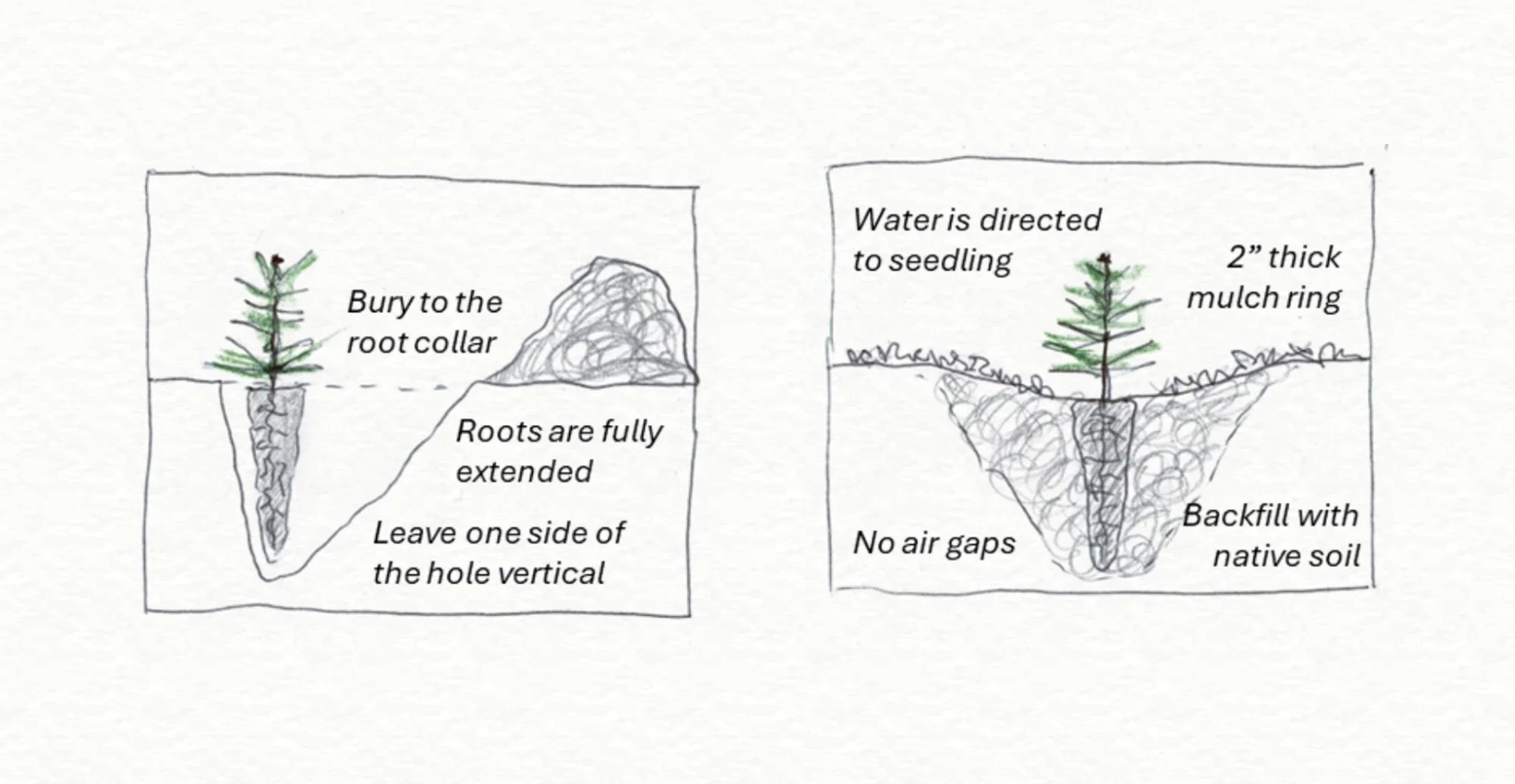
Make the hole deep as the roots are long, and wide enough for the roots not to be cramped. Leave one side of the hole vertical to help keep the seedling straight when backfilling.
Place the seedling in the hole.
Make sure the roots can fully extend vertically without bending or “j-hooking,” and the root collar is at the soil surface. If you are unable to dig a hole deep enough, trim the roots: the roots below ground should be at least as long as the seedling is tall.
Backfill using the soil you dug out.
Do not amend the soil with compost or fertilizer. Gently hold the sapling against the vertical wall of the hole as you add soil. Pack out air pockets so everything is snug. Plant seedlings so that the soil line is at, or half an inch above, the root collar.
Tamp the soil down.
Tamp the soil around the sapling with your hands or heel of your boot, creating a slight depression for water to drain towards the plant.
Mulch!
Mulch a 1-foot wide circle around the seedling in a 2-inch thick layer. Mulch helps retain moisture, and suppress unwanted weeds and grasses. Keep mulch 1 inch away from the seedling trunk. Re-mulch 1-2 times during the growing season for the life of the plant.
Water immediately.
Being transplanted is stressful business. Then water once every week, from late spring until the ground freezes in the fall, for 3-5 years. If the weather is hot and dry or the soil is well drained, plants may need more frequent watering, especially for the first couple of weeks.
Protect your seedlings!
Keep them safe from backyard barbecues, soccer balls, dogs, deer, and weed wackers. It will take a couple years for your seedling’s bark and trunk to toughen up.
Keep grasses and weeds at bay.
Pulling weeds and grasses, and maintaining a layer of mulch around your new plant for a couple of years, helps knock down the competition for sun, water, and nutrients until they are able to reach higher and deeper and fend for themselves.